
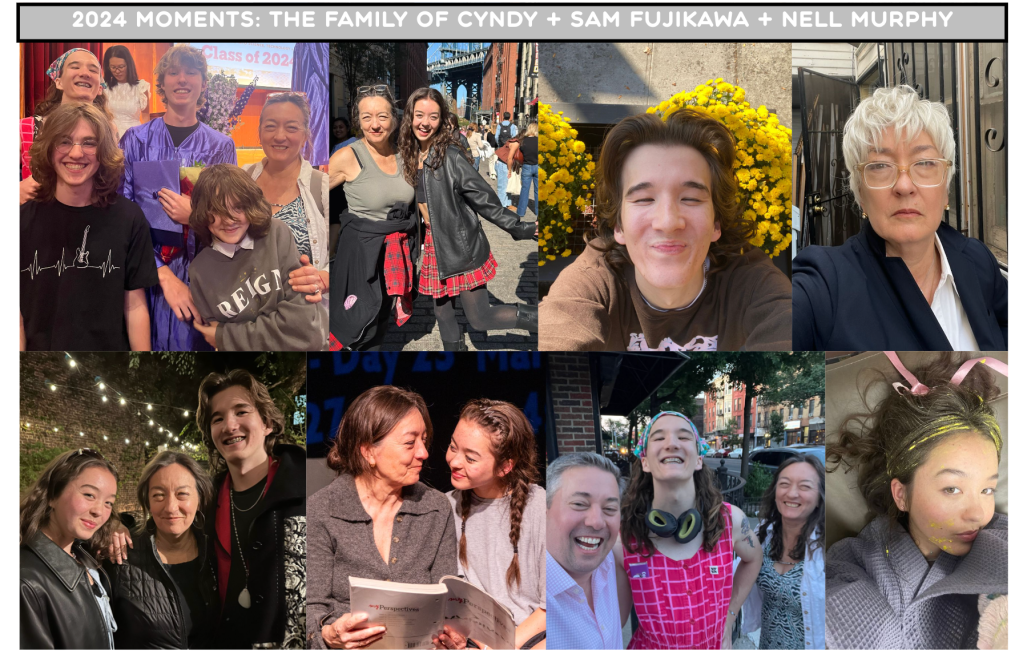
December 30, 2024
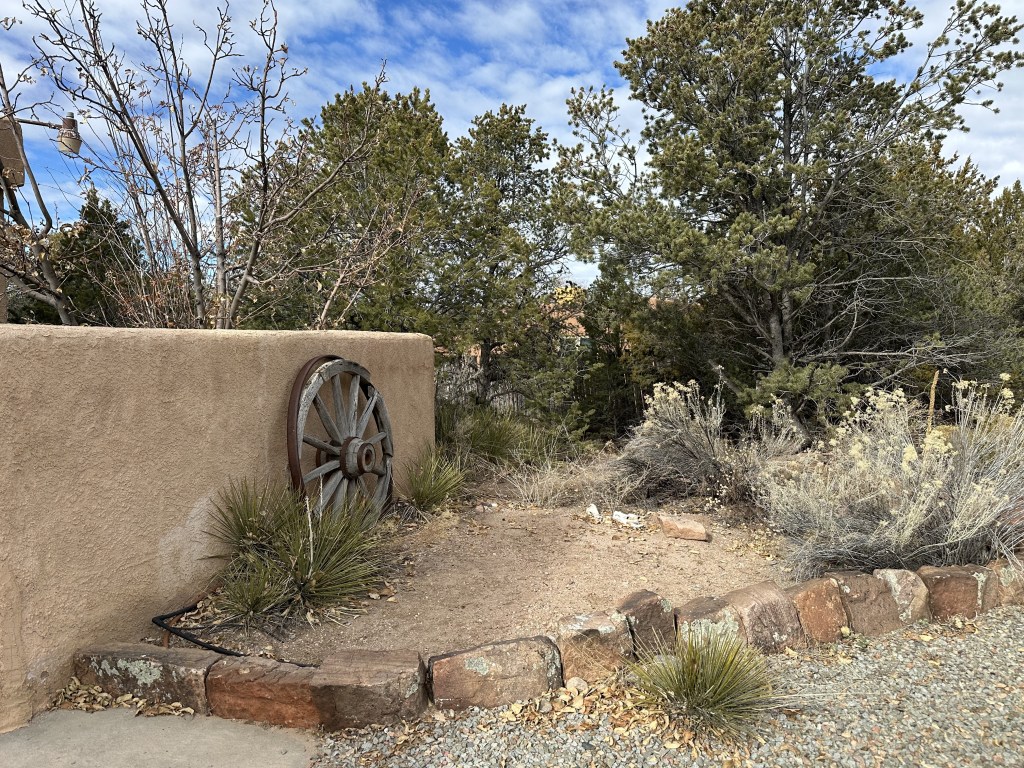
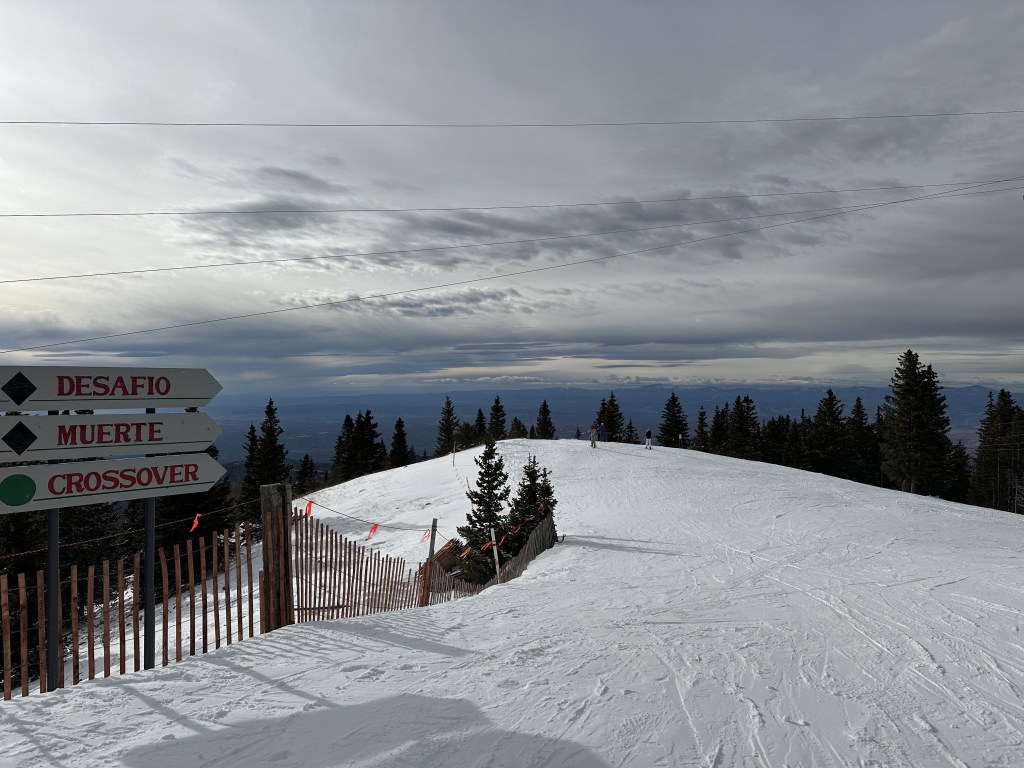
Sitting in the Santa Fe home over Christmas amid the usual comforts – posole, tamales, noble fir, my childhood piano, pictures of magical kachinas, trinkets from Nell as a preschool child, Sam’s early painted ceramics – waiting for the thing that usually starts the ball rolling. What movie, what homeless woman, what encounter with a wild animal, or some simple wisdom from my child. Last month was dark. Baby steps I told myself every morning since the second week of November. But all I can feel is big elephant in the room.
We drove back to Los Angeles last night, taking a detour through the middle of Arizona. Interestingly, we only fought once through the Christmas vacation, and it was about which way to drive back. Such a simple thing can open so many old wounds. Walls were down, eyes were wiped. Breaths were taken. Walls went back up. Space was given. And a decision was made. We would take the long way home through Hopi Land, adding 2 hours onto the drive. Sam and I had done that detour in 2019 after the scattering of Dennis’ ashes in Taos. It had bugged Nell ever since that we had done that side trip without her. And she was missing her dad pretty bad, as was I. So that would be the path home. Our first stop was Keams Canyon where we had scattered our dog Joe’s ashes sixteen years prior. We made a brief stop at First Mesa and gazed gently at one of the oldest towns in North America. I saw a few Hopis from the car window and waved hello and was acknowledged. We stuck out pretty badly, but I did get out of my car and one guy – careworn face and bad teeth — approached me. His name was Louis and he was putting some food out for a stray dog. I made small talk about my late husband who I claimed founded Hopi Radio, insinuating that maybe I wasn’t completely out of place, and he asked me what was his name, and I replied Dennis Murphy. I said do you live here (duh) and he pointed to a heap of adobe and said yes, that’s my wife’s house. He apologized that there was a lot of trash on this side of the Mesa and blamed the wind. I asked if there was any pottery we could looked at, and he called to someone in the next-door heap, “Louie,” who doesn’t answer at first. “Louie! Is there any pottery today?” It seems Louis and Louie are popular names in First Mesa. Then we crept slowly down First Mesa in the Prius, back to the highway and on to Second Mesa, where we passed through another dusty brown dilapidated adobe and cinderblock town, seemingly empty, frozen in time, and then a brief stop at the Cultural Center, which was closed, and I bought freshly roasted piñon from a man in the parking lot just packing up. We crunched and drove and debated whether we were supposed to swallow the shells. I really wanted to drive to Old Oraibi at that point – allegedly the oldest town in North America – just down the road. We were so close by. But I could feel I was pushing my luck with the kids.
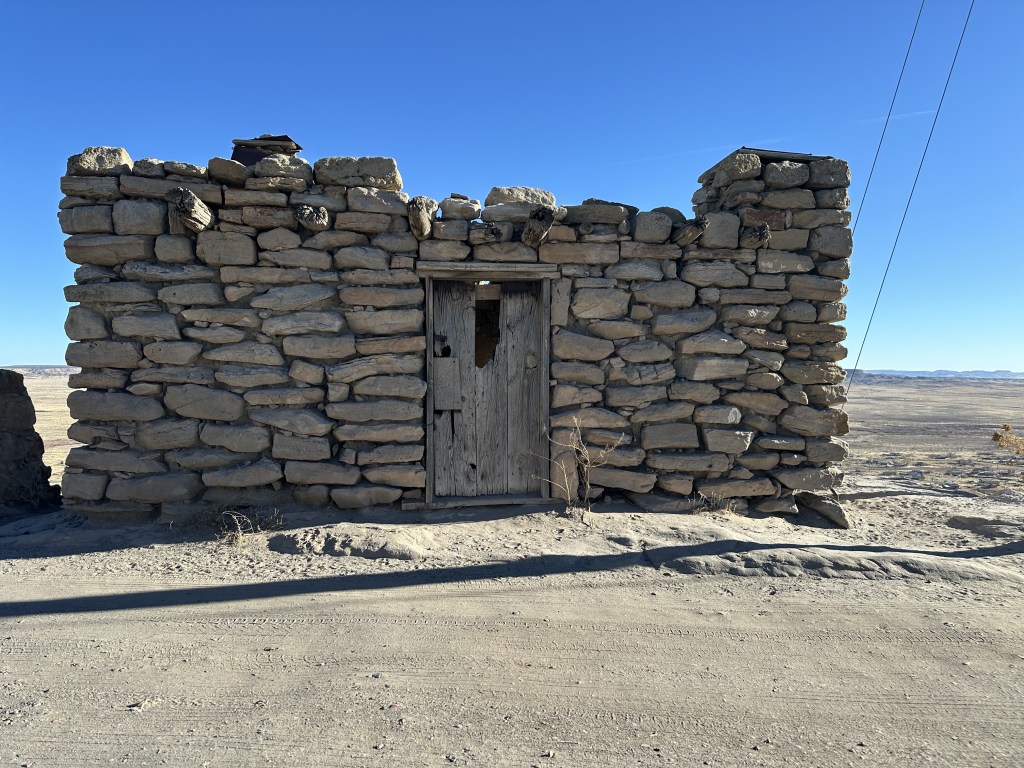
Ascending First Mesa, we saw this stone building. We took no pictures on top of the mesa out of respect.
On the way from Keams Canyon Nell had asked me what exactly her dad had to do with Hopi, and so I explained as best I could, as it was before our time together. Once we had passed through, I added that Hopi culture was quite religious, and that I think it fascinated her dad. As you may remember, Dennis was a theologian. He attended a Christian college, and then later pursued an MDiv at Union Theological Seminary in NYC. And although he took a complete detour in his career, his Christian values, or at least the aspirations, were intact. He wanted to make a change in the world through action, not dogma. He saw himself as a servant to his fellow man. To make a difference in a situation, even on a film set. I think he longed for an organized religion he could stomach but never found one. But he liked seeing how the consistency of faith and traditions at Hopi guide this small community 2000 years later. And he believed that a radio station would help hold its future together, especially the Hopi language.
Descending First Mesa we came across this bush with baby eagle feathers. The Hopi believe that the eagles will then ascend to the heavens to deliver messages to the gods.
I spent a lot of time after the election unfriending people, and silently begrudging friends of mine that identify as christian (small c) but who prioritize slightly cheaper gas and eggs over values. The hypocrisy in the USA is staggering. At what point to I say enough, I have to leave now. Start the paperwork for Portugal. I found out I can in fact live in Japan because of my grandparents. It’s the wrong message to send my kids of course, who are in fact inheriting all of our bad choices, and are well aware of our failures. One of the hardest moments in November was hearing my daughter’s disappointment, voting for the very first time. I try to explain to both of them how many times the dam was about to burst and that we’ve been hanging onto these same values by our fingernails at times. And while it’s OK to demand what is needed now, the strategy is sometimes a long game. But perhaps it just is what it is. Maybe we need to burn it down. Or maybe we need to wait and watch them eat their own. Like many others, I’m frozen.
We had just gotten back into cell range when I saw a text from my friend and sometime travel buddy, Peter: “RIP Jimmy.” Cryptic but I instantly knew which Jimmy.
About ten years ago I was working in Georgia on movie about male strippers going on a road trip through the South. It was about the most fun a person could have on a film location, living on the beach, riding around Tybee Island in a golf cart, and yes, getting to watch rehearsals. But the highlight of the time in GA was the bucket list trip I made on my last Sunday to Plains.
In the parking lot, license plates from around the country surrounded my rental. A local teacher who had known the Carter family all her life gave us something of an introduction and an orientation, in a no-nonsense, small-town demeanor. In the little but packed church, President Carter, then 90 years old, delivered his Sunday School lesson. It consisted of dissecting a passage of the New Testament concerning love, and what it means to love and embody love. It was plain, thoughtful, organic. Devoid of anything preachy. If there is a takeaway for me, I would say it was about discovery. Not mine. His.
Rosalynn was there in the front pew. I had met her in 1984, just three years after they had left the White House, but more significantly, just at the early moments of establishing the Carter Center. I waited until everyone had gone and she looked at my name tag and said “Well hello Cyndy.” We spoke about Apartheid, El Salvador – things that I was steeped in at the time – and she validated me and told me what she and Jimmy were also doing around the world to make a difference.
Now, thirty years later, in the small church, youngish looking Secret Service agents sat in the pews nearby. And everyone who traveled there to see what makes Jimmy Carter tick, took it in. This man who has done so much with his life in a non-governmental role in terms of world health, conflict resolution, democracy, climate change, human rights, mental health, world peace, gender. And yes….in relation to my family – he is the president who established the Commission on Wartime Relocation and Internment of Civilians, paving the way for the Redress and Reparations, which the star of both Bedtime for Bonzo movies got all the credit for. What Jimmy gave us welled from this small town, this small church, this small (lower case s) book, these simple values. It was all here in Plains. And that’s what Christmas is all about, Charlie Brown. Embody your faith.
I got my photo taken with the Carters. Jimmy rested his hand on my back while the picture was taken, made eye contact with me gently and said, “very nice.”
with President Carter and Rosalynn Carter at Marantha Baptist Church in Plains GA, November 2014.

I took my camera and got in my car to see the sights of Plains, which is pretty much all a monument to Jimmy and Jimmy’s election. It took all of about 70 minutes, including the school that had spawned someone who literally changed the world. I hadn’t had lunch, so I went to look for something to eat, and there was only one place open. It was sort of a small cafeteria, where you were greeted by someone sitting behind a table, selling you a carnival ticket for 7 bucks or something. Then you take the ticket to the counter and on a tray you got whatever the meal was that Sunday. I remember macaroni & cheese and some kind of meat, maybe jello too.
I had just enough time to drive back to Savannah via the National Andersonville Historic Site, a Civil War Museum. But when I got there, the museum was closing early because there was a big storm coming. I was told to get in my car quickly and start driving, which I did. And all the way back, a big black cloud chased me. I could see it in the rear-view mirror.
As much as I want to offer some wisdom on the eve of 2025, I have none. Well, maybe this.
We have an expression, a code in our family: WWDD. (What would Dennis do?). “Oh that’s a WWDD moment.” Dennis was a think-outside-the-box voice, which didn’t often jive with my own, but which usually ended in some kind of problem solving, often very creative. So WWDD?
Get back up and fight my friends. Fight fight fight. I have no doubt that is WDWD.
XO Cyndy Fujikawa
https://www.cartercenter.org/peace/index.html
 P-Nut gallery notes....